Laissez-faire A Postmodern Design Story About Capitalism
Laissez-faire is a postmodern design that tells a story about capitalism. Capitalism sucks up the earth’s natural resources then, through the processes of labour transforms them, into wealth. However, only a few benefit from this. It causes hardship for many and even death.
The promise is that the production of a utility that benefits the masses has been exploited to the extreme. Advances in psychology, marketing and our natural human traits have been used in an adversarial context. Basically, utility is mostly redundant and has been replaced by mass a market of disposable and unnecessary junk.
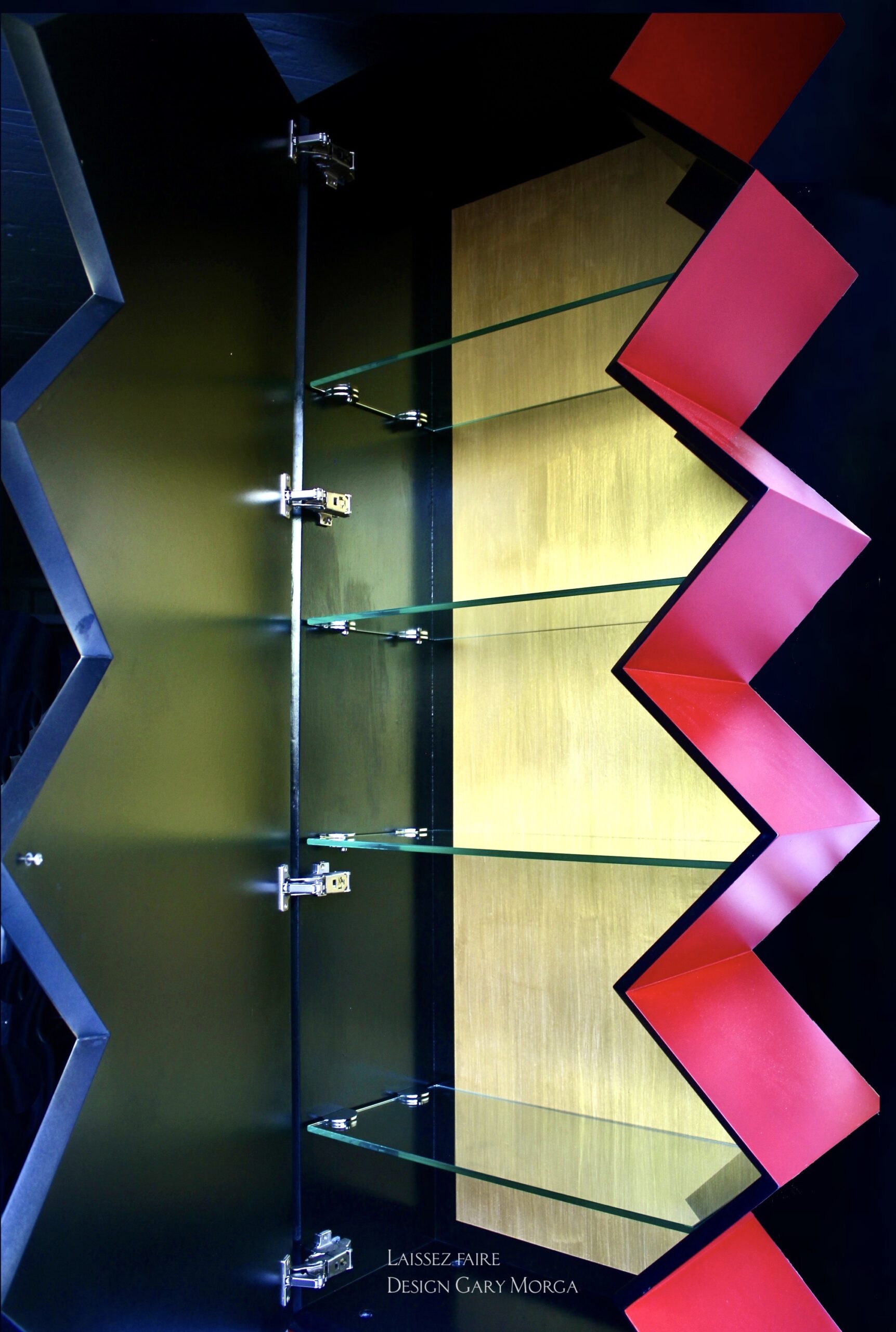
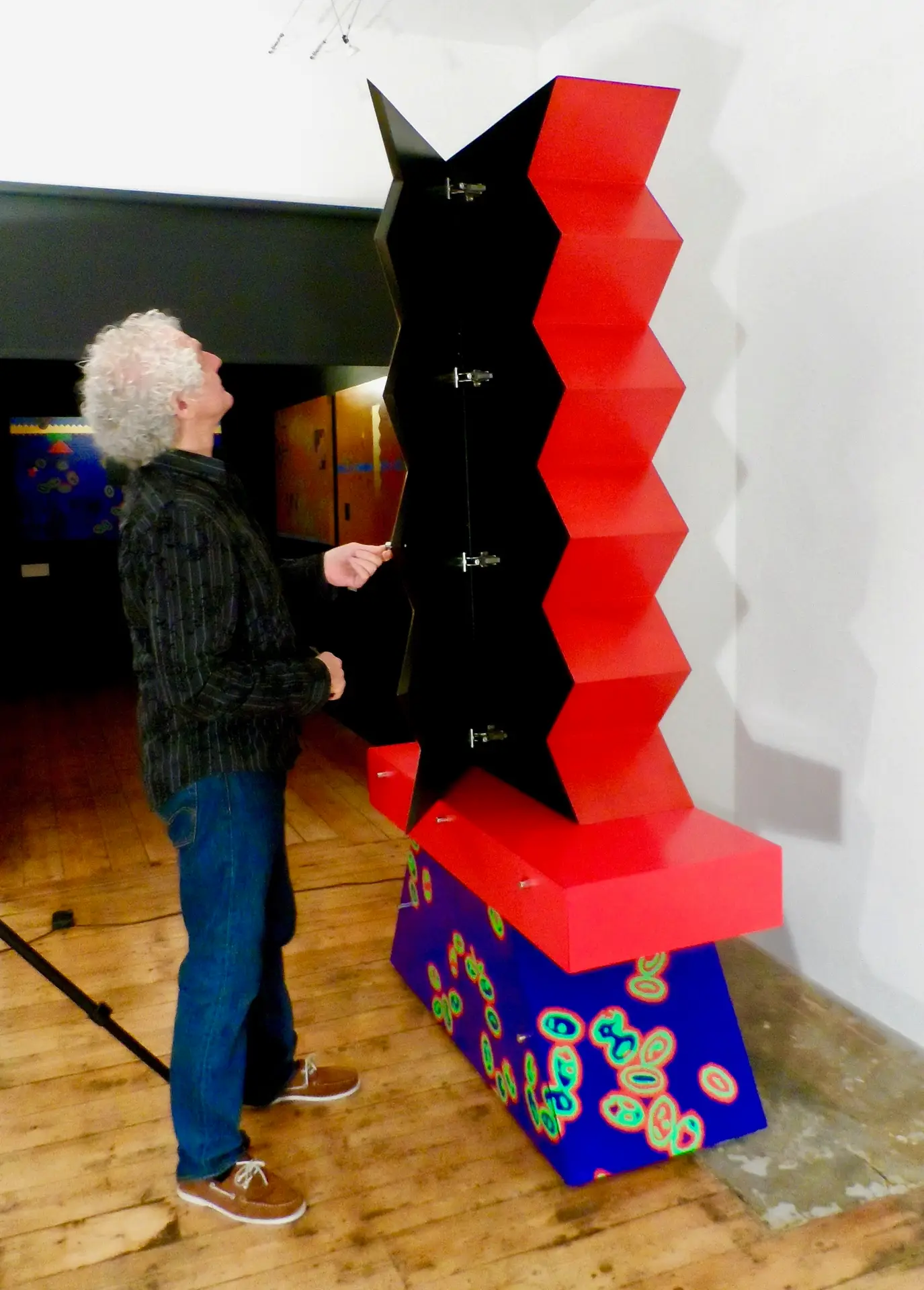
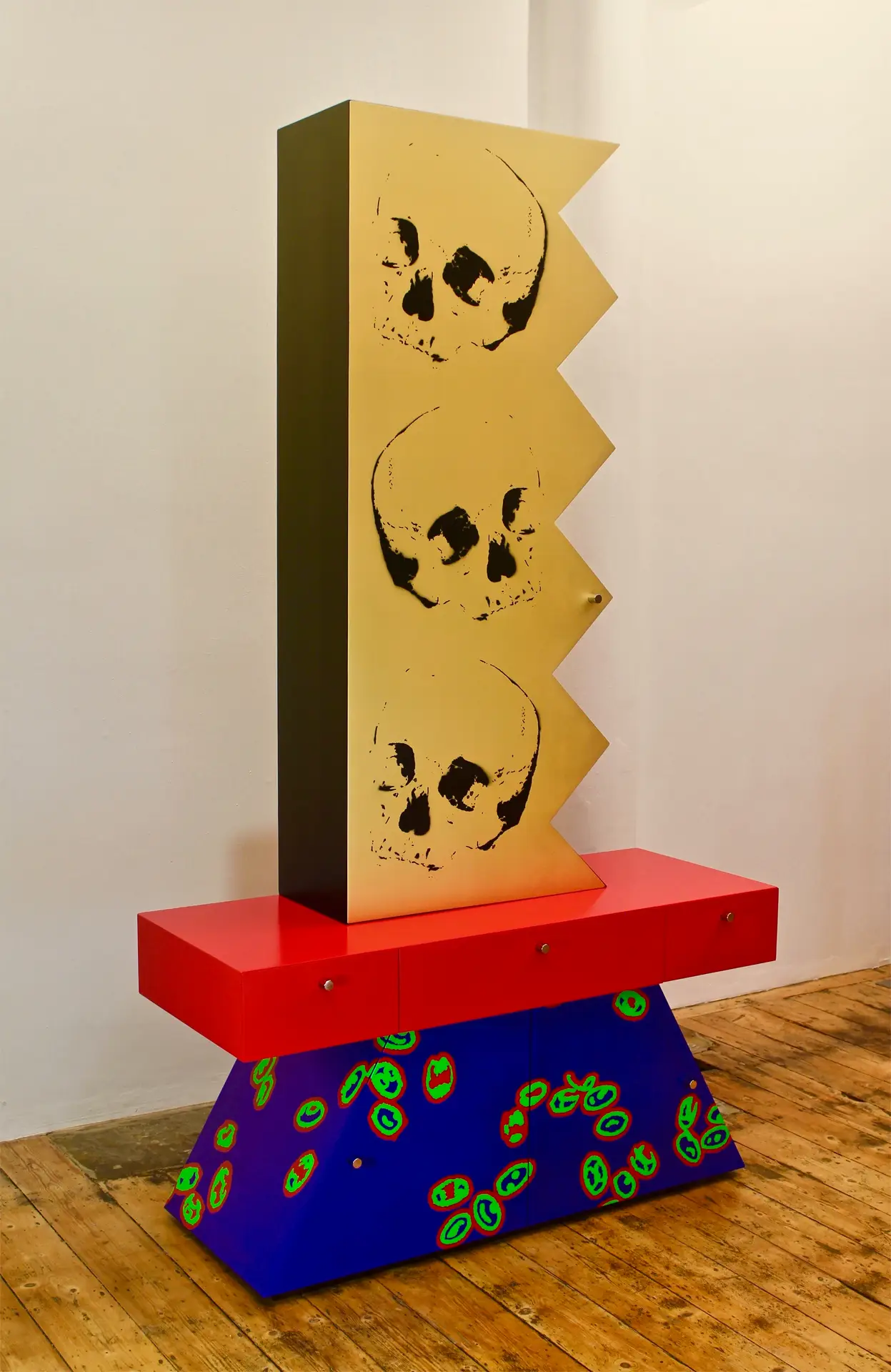
It’s a gun Cabinet with three cupboards and three drawers.
postmodern design
The Article The painting & The Bracelet
Laissez-faire
Laissez-faire, postmodern design
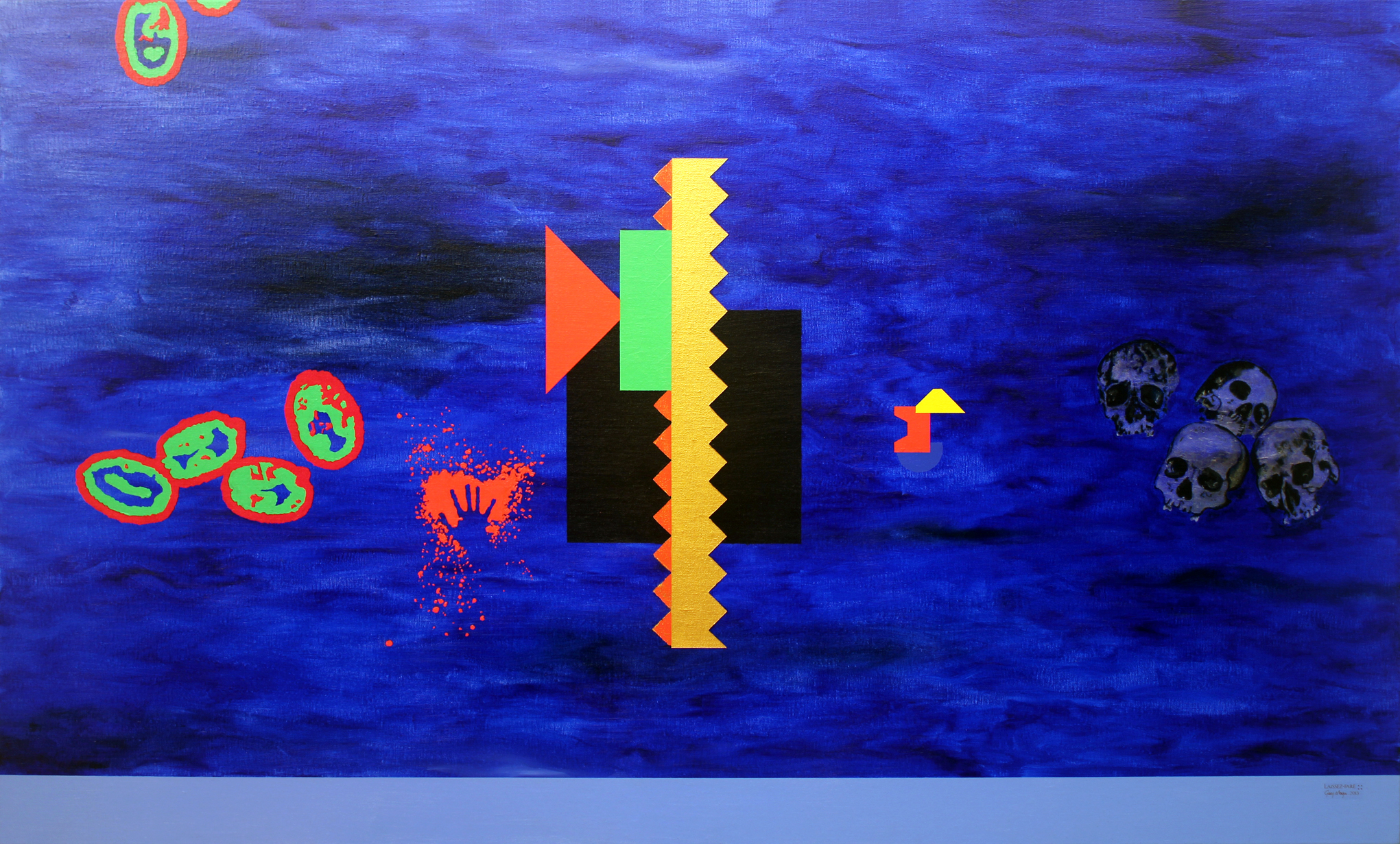
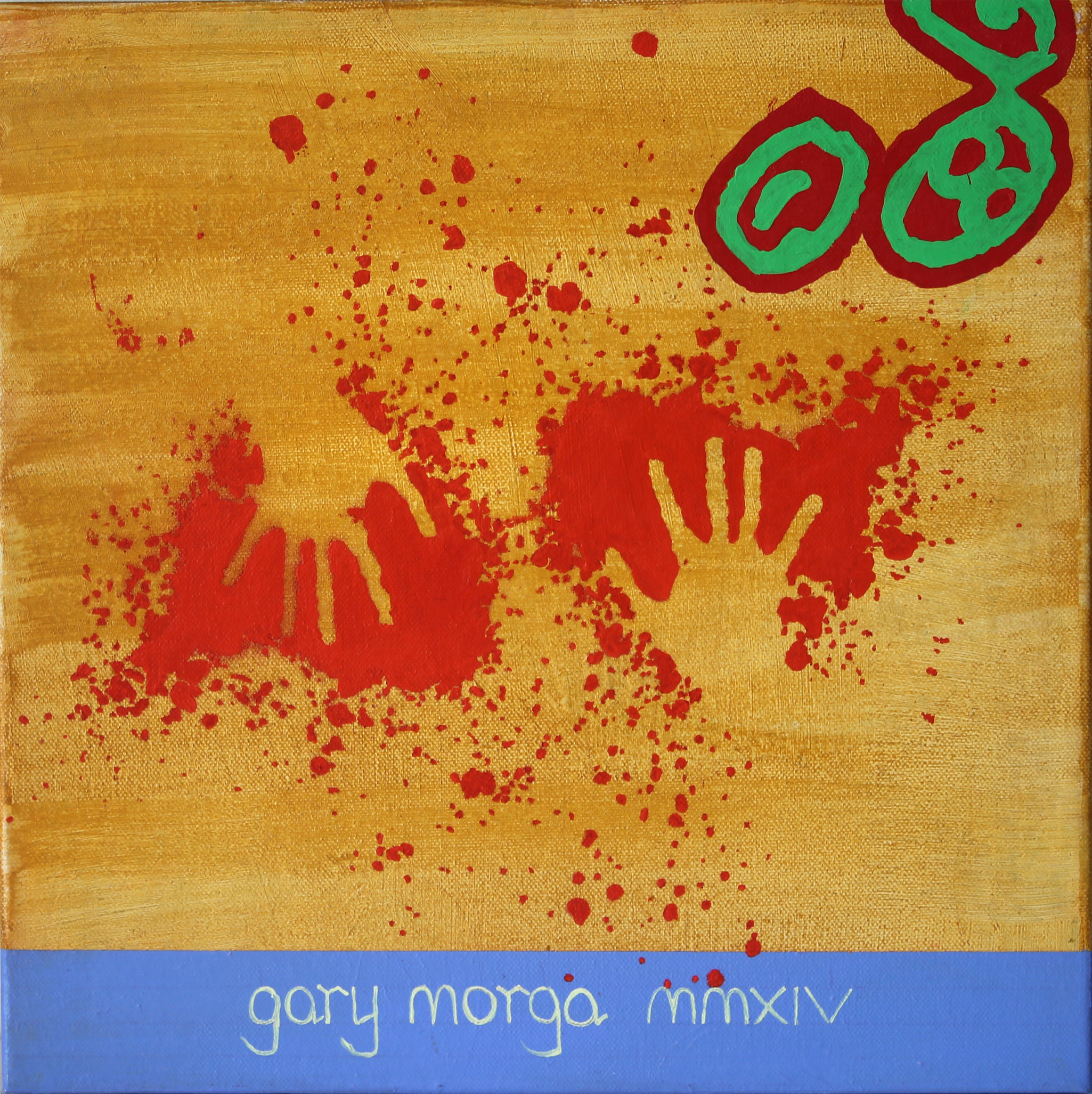
Laissez-faire, (A portrait of Capitalism),acrylic paint on linen, 150 x 90 cm
Laissez-faire, (A Portrait of Capitalism 03) Acrylic on Linen, 150 cm x 90
Laissez-faire and the postmodern design story. The visual elements resemble an upside-down hopper. that is sucking up the natural resource of the earth. At the same time the process of labour (symbolically, the red, man-made rectangle in the article and the red, child handprints in the painting) it is transformed into wealth signified the use of gold as a sign.
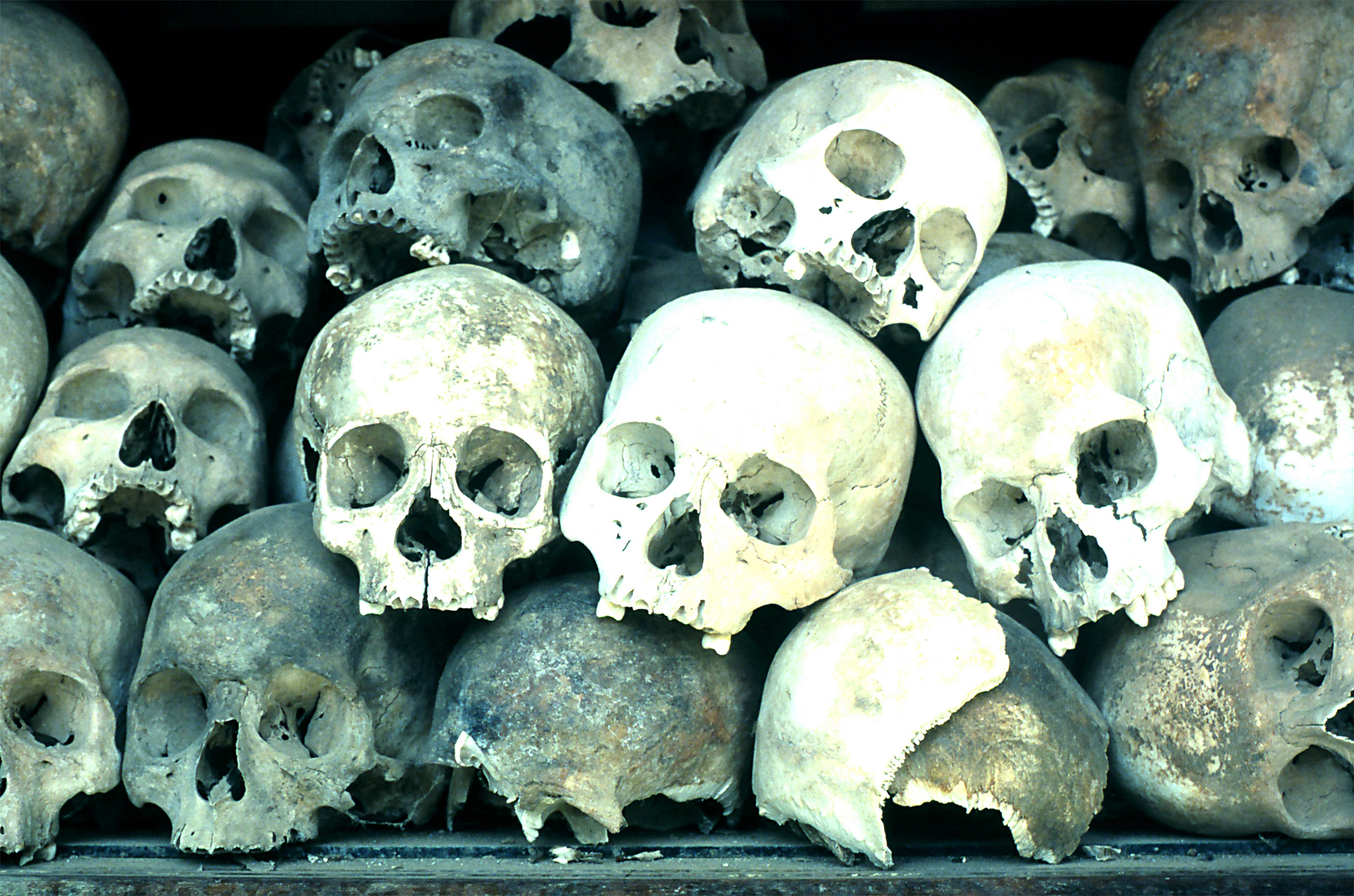
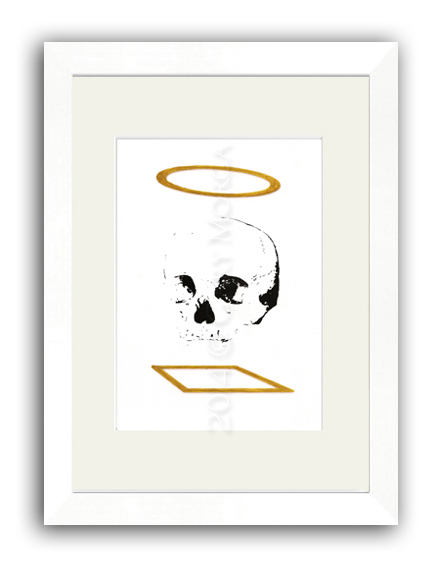
There’s little regard for the planet or humanity. This is signified by the three skulls, and the aggressive saw-tooth edge.
On the left side of the cupboard there’s a black rectangle. This symbolises ignorance. Obviously unconsciousness is an important component that is necessary for extreme of capitalism.
Blue is the colour of our oceans, sky and planet – the home to our resources, to us and to all life.
During the second stage of development Laissez-faire revealed its function, as a gun cabinet. Obviously this is in preparation for the peoples revolt against capitalism. However, the acquisition of two AK47’s proved problematic. Consequently the great awakening is underway.
The number three, 3, has a presence throughout the design and represents aspects of dogma embedded in Western culture.
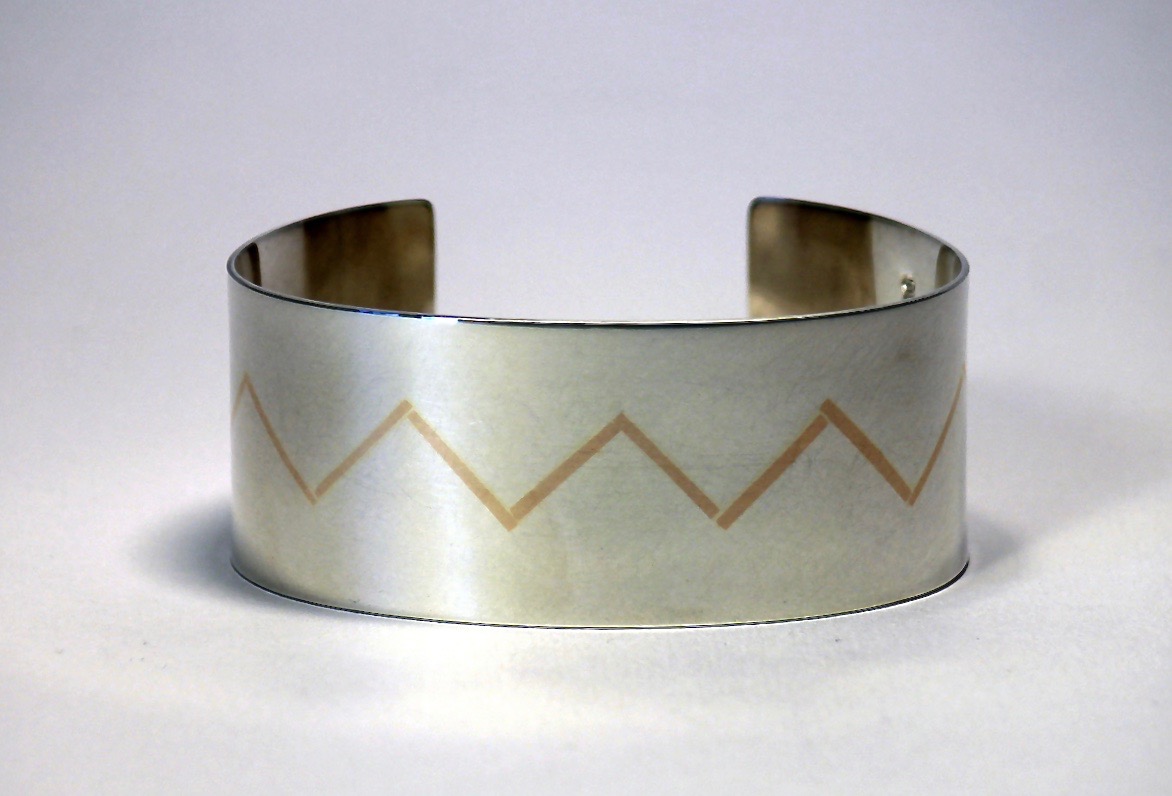
Gold and Silver cuff bracelet
Silver and Gold Cuff Bracelet
Silver cuff bracelet
Laissez-faire Laissez-faire Postmodern Design employs the three linguistic signs; symbol, index and icon.
Symbol: the colours and forms are chosen for their symbolic values.
Index: the skulls represent adversity, death and destruction.
Icon: the article is a cabinet and it looks like and functions as a cabinet.
The structural configuration of Laissez-faire uses signs similar to the principles of the structure of language (Structural Linguistics, Structuralism), as laid out by Ferdinand de Saussure, Course in General Linguistics. Saussure is the father of modern Linguistics. His work has influenced most of the Social Sciences.